

The power of fans
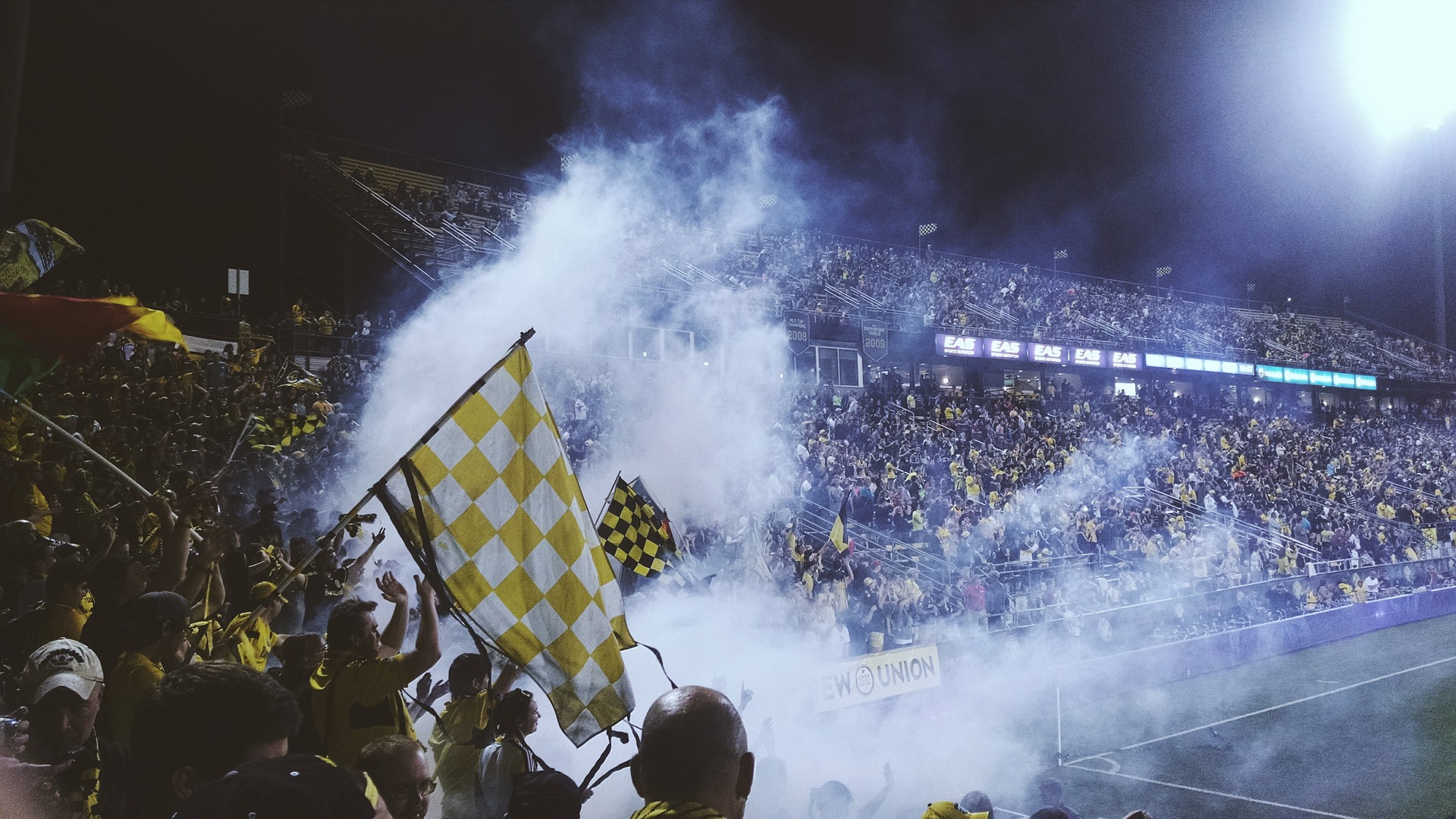
It is widely acknowledged that cheering can have a positive impact on a team's performance. The impact of fans represents one of the most important social psychological questions in sport. Is this also the reason why "home advantage" is so coveted? The researchers Epling et al. (2011) found that the effects of cheering and booing differ depending on the sport. Free-throw performance in basketball was not affected by the audience's contribution or the absence of it. However, cheering affected the performance of baseball pitchers, and led to poorer performance in golfers. Frequent crowd support in the form of cheers, flags, banners and scarves can affect players' psychology and increase performance by up to 8% in football. Accordingly, fans are an important part of any club and should be regarded accordingly. They identify with the team or individual players and remain loyal to the club even if success does sometimes miss out. Fans bring the stadium to life and, as already described, can influence the team's performance. The 12th man therefore also has the power to decide a game. This effect can also significantly weaken a team if they have an away match that is too far for the fans. A club not only has a responsibility to the fans who pay entry and membership fees. The fans should also become aware of their role and behave accordingly. Negative experiences can affect a player's mental strength negatively as well. In addition, fans are also a crucial economic factor for clubs.
Fans and players
Players are not just machines who can deliver their performance at any time. They are personalities, have strengths and weaknesses and show a natural performance variability. They have to make decisions in fractions of a second. For this, they need a strong mind with excellent sports awareness to read and predict the game. Sports that take place at a professional level demand a lot from players both physically and mentally. They are not only competing against the other team or opponent, but also against themselves. Playing under pressure can be difficult for anyone. Playing at national or international level, in front of millions of fans inside and outside the stadium, is a completely different game.
How do players deal with it?
Sport psychology has become a growing industry in schools, universities and professional sports. Many schools and clubs employ sports psychologists to help players cope with the pressures and mental challenges that come with consistently performing at the top level.
What is a sports psychologist and what do they actually do? These professionals apply the theories and practices of psychology to the world of sport. They help athletes with a wide range of mental and emotional problems. Sports psychologists not only deal with mental stressors that arise during the match, but also help players deal with other mental factors such as depression or anxiety that can affect their performance.
References
Epting, L. K., Riggs, K. N., Knowles, J. D., & Hanky, J. J. (2011). Cheers vs. Jeers: Effects of Audience Feedback on Individual Athletic Performance. North American Journal of Psychology, 13(2).
Hasel, M. C. (2019). Beziehung mit den Fans. In Der professionelle Fußballklub (pp. 195-200). Springer Gabler, Berlin, Heidelberg.
Strauß, B., & Staufenbiel, K. (2020). Soziale Einflüsse durch Zuschauende im Sport. In Sportpsychologie (pp. 381-394). Springer, Berlin, Heidelberg.